Vancouver
Home Renovations in Vancouver
Kitchens, bathrooms, basements, suites and whole interiors in Vancouver houses, built to the City's own Building By-law and energy rules. We apply for the permits and book every inspection.
Finalist, Residential Renovator of the Year, Georgie Awards 2026
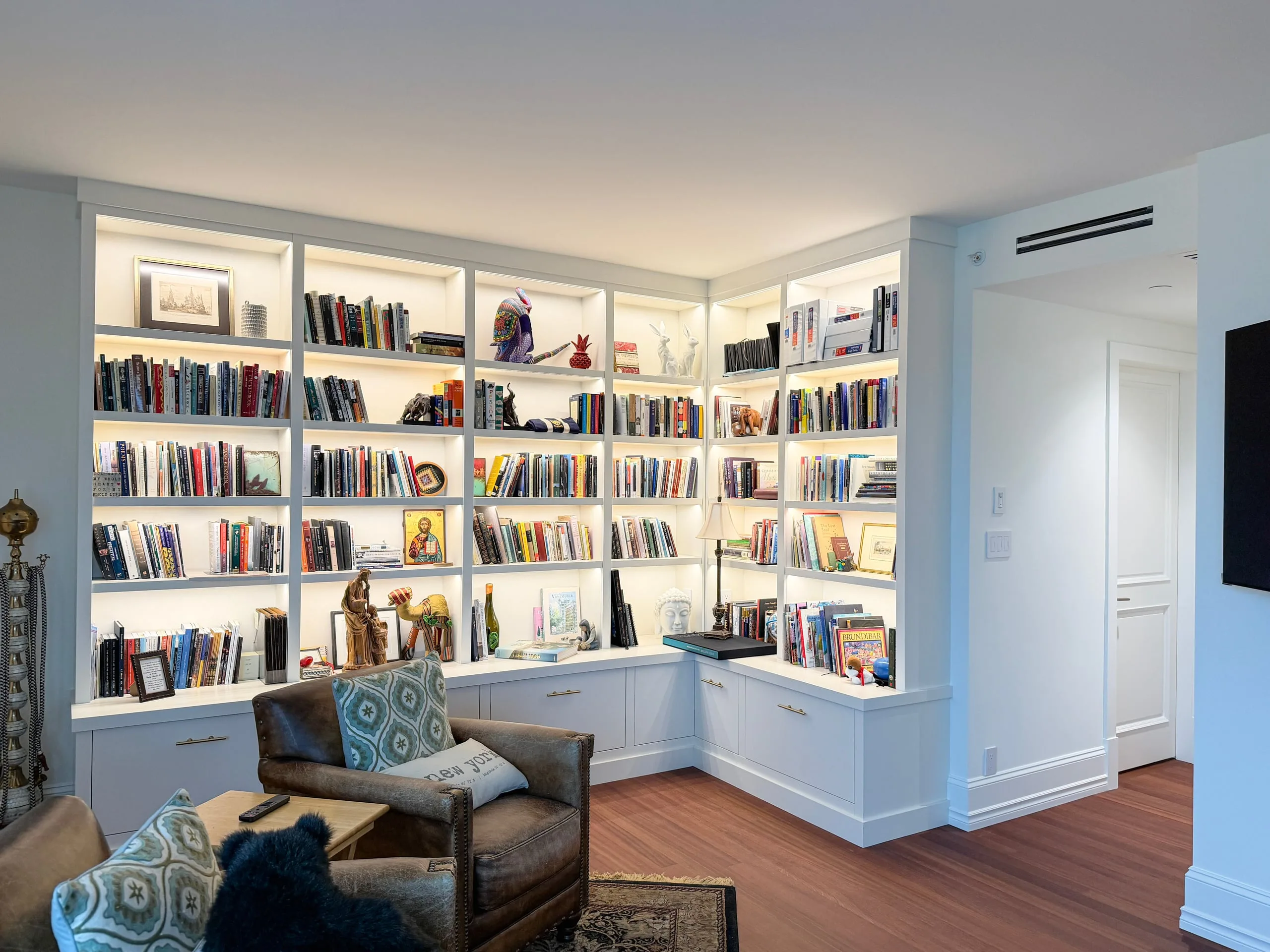
Renovating a House in Vancouver
Our office is on 232 Street in Langley Township, and we work in Vancouver and other Metro Vancouver and Fraser Valley cities.
As your renovation contractor in Vancouver, we run your house renovation the same way as our home renovations in Langley.
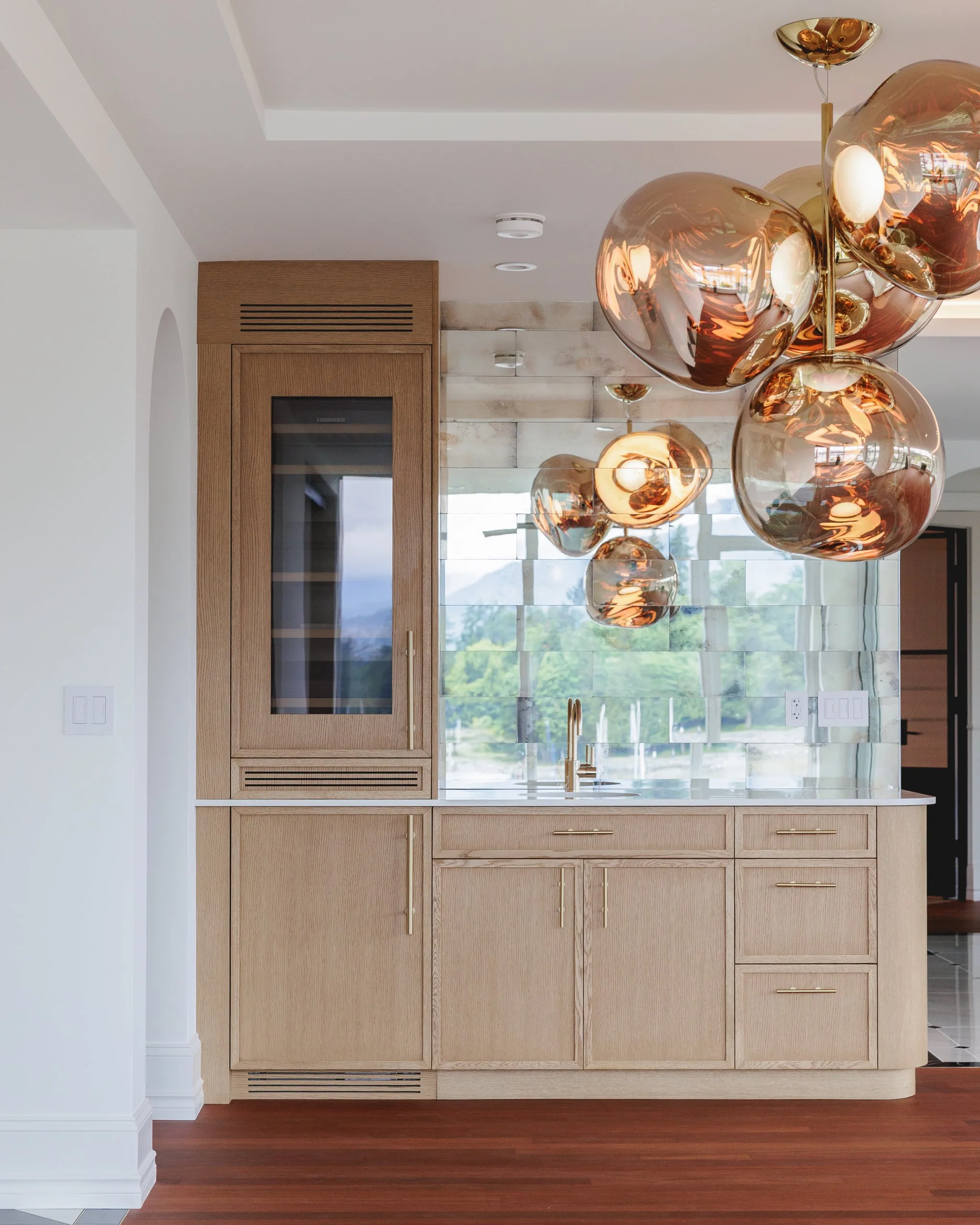
In a condo or townhouse, the strata’s rules shape the work too, and the job runs as one of our condo and townhouse renovations. In Vancouver, we renovated The Harbourview Residence, a waterfront condo in Coal Harbour, over about 12 months, and The Full-Interior Condo, with a reconfigured kitchen and redesigned bathrooms.
Our founder, Abel Strujenco, leads the company, and Randy Ferchoff, our Director of Operations, manages your renovation through to handover. We are members of HAVAN, the Homebuilders Association Vancouver, and of RenoMark, and every renovation carries a two-year labour warranty through our RenoMark membership.
What We Renovate in Vancouver Houses
- Home RenovationsA single floor or the whole interior of the house.
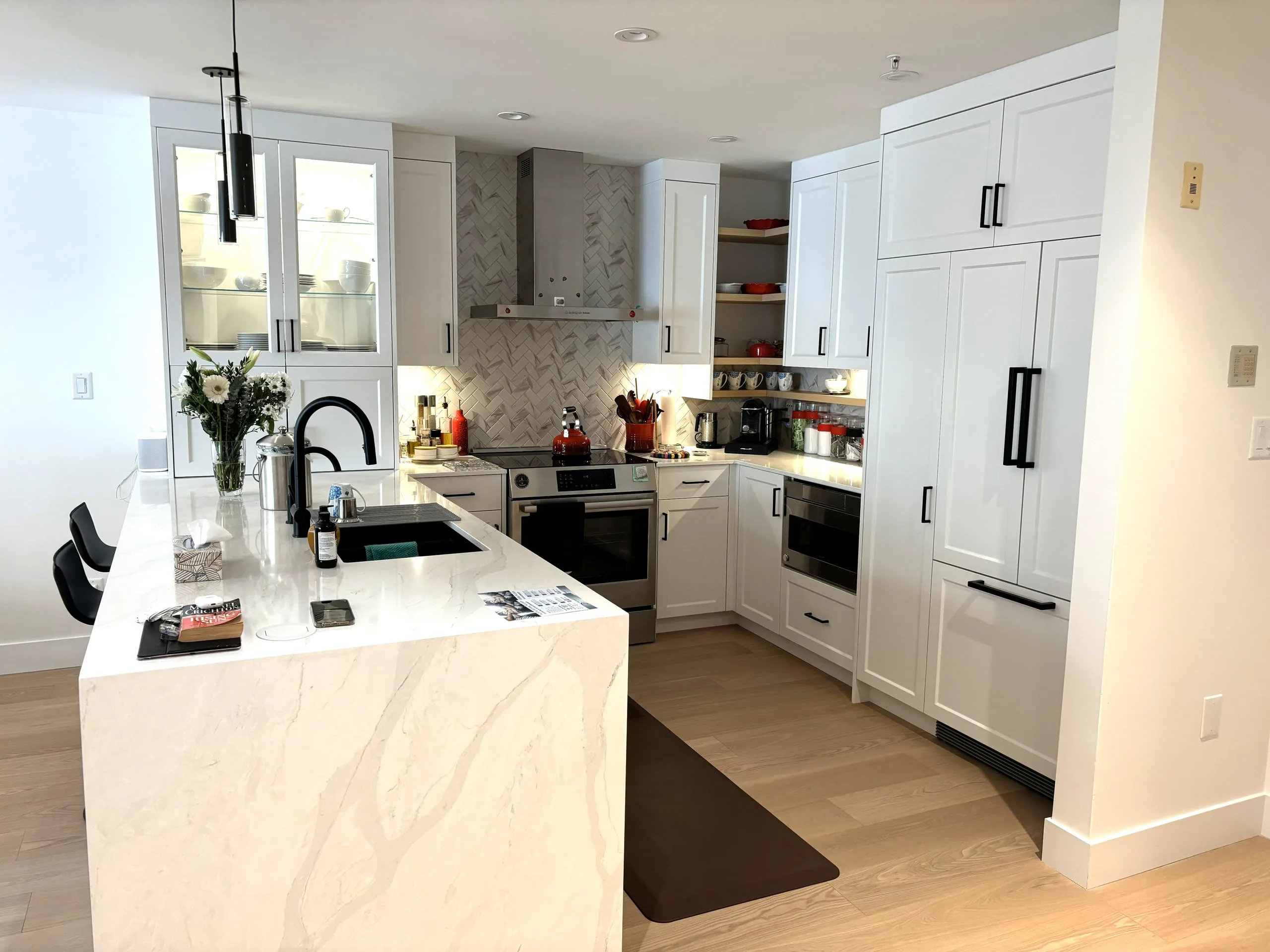
- Kitchen RenovationsThe layout, cabinetry and counters, and the plumbing and wiring behind them.
- Bathroom RenovationsEnsuites and family bathrooms, from the waterproofing and tile to the vanity and fixtures.
- Basement RenovationsUnfinished basements turned into living space under a City of Vancouver building permit, or finished ones renovated.
- Legal Basement SuitesA secondary suite added or legalized through the City's development and building permit.
- Home AdditionsMore floor area for the house, within what your lot's zoning allows.
- Accessible and Aging-in-Place RenovationsZero-step entries, curbless showers and reworked layouts, by a CHBA Qualified Adaptiv Home Specialist.
Renovation Permits and Rules in Vancouver
In the City of Vancouver, the building rules, trade permits and energy requirements for a house renovation all come from the City itself.
The Vancouver Building By-law
The BC Building Code does not apply in the City of Vancouver, which writes its own building rules under the Vancouver Charter. A Vancouver renovation is built to the 2025 Vancouver Building By-law, No. 14343: the 2024 BC Building Code with Vancouver-specific provisions, in effect since September 15, 2025.
City of Vancouver, Vancouver Building By-lawBuilding Permits for a Vancouver Renovation
You need a building permit to move interior walls, move or add plumbing, electrical or gas lines, make structural changes, or create a new room in a basement or attic that your zoning allows. Building or altering a garage, shed or deck needs one too. Replacing fixtures, cabinets or flooring, painting and minor non-structural exterior repairs need none, and an issued permit lapses if work does not start within six months.
City of Vancouver, when you need a permitPlumbing, Electrical, Gas and Mechanical Permits
The City of Vancouver itself issues the plumbing, electrical, gas and mechanical permits for a house. On a renovation that needs a building permit, the electrical permit is issued only after the building permit, and the gas permit may be held until then. On a contracted job, the electrical permit is applied for by a licensed electrical contractor with a City or inter-municipal business licence, and the City aims to issue simple electrical permits within five business days. Replacing a sink or toilet in the same place needs no plumbing permit; moving it does.
City of Vancouver, electrical permitEnergy Upgrades on Larger Renovations
Renovating a house, a duplex unit or a laneway house brings energy requirements set by the total project cost. For applications made after September 15, 2025, from $153,000 to $254,999 an existing gas hot water system must be replaced, with some exceptions, by a highest-efficiency one: electric, heat pump or hybrid. Over $255,000, the house also needs an EnerGuide evaluation before and after, two more energy upgrades, and electric space and hot water heating.
City of Vancouver, energy requirements for home renovationsAsbestos and Hazardous Materials
Before any renovation starts, WorkSafeBC requires a qualified person to inspect the house for hazardous materials such as asbestos and lead, and asbestos marked for removal is taken out by a licensed abatement contractor. In a July 2026 bulletin on demolitions, the City dropped its stand-alone salvage and abatement permits, citing high compliance with the provincial hazardous materials rules, and said it would now focus its enforcement on renovation projects.
WorkSafeBC, OHS Regulation Part 20Construction Hours in Vancouver
On private property, construction noise is allowed from 7:30 a.m. to 8 p.m. on weekdays and from 10 a.m. to 8 p.m. on Saturdays. None is allowed on Sundays or holidays without a noise by-law exception permit.
City of Vancouver, construction noise hours
Kitchen and Bathroom Renovations in Vancouver
Kitchen updates and bathroom renovations valued under $250,000, with no structural change, can go through the City of Vancouver's Residential Renovation Fast Track, which issues permits within a week. Alterations that make a washroom more accessible qualify too. A new layout that moves the sink, toilet or shower also needs a City plumbing permit, and the City aims to process plumbing applications that need no plan review the next business day.
Kitchen RenovationsSecondary Suites and Laneway Houses in Vancouver
In Vancouver, a secondary suite is an approved dwelling unit inside a house or duplex, with its own kitchen, living area and outside entrance. A house can have one suite and a duplex two, one per unit, where the zone allows suites in a duplex, and a suite cannot be strata-titled. Adding or legalizing one takes a development and building permit, because it formally changes the use of the house, and the suite is legal only once it passes its final inspection. A house in the R1-1 zone can also have a laneway house of up to 0.25 floor space ratio (FSR) and 186 m² (2,000 sq ft), which cannot be strata-titled or sold apart from the house. A laneway house counts as a new home, so BC Housing requires a licensed residential builder and home warranty insurance for it; a suite inside the house needs no home warranty.
Legal Basement SuitesCharacter and Heritage Houses in Vancouver
Keeping a character house, typically one built before 1940, earns incentives in any R1-1 zone: up to 0.85 FSR against 0.6 for a single detached house, conversion into several units, or an infill house where the garage would normally stand, with the units rentable or strata-titled. Houses on the Vancouver Heritage Register, which lists almost 2,300 buildings and structures, can be altered outside, but their character-defining elements are expected to stay, and a listed house that also carries legal protection cannot be altered without a heritage alteration permit. Listed houses, and houses the City has flagged as potential additions, go through a heritage review with the permit application, and a heritage house may qualify for relaxed energy upgrades.
Additions and Zoning for Vancouver Houses
An addition in Vancouver cannot use the fast-track permit, and any new room has to be one your zoning specifically allows. Lots that were zoned RS have been in the R1-1 Residential Inclusive zone since October 17, 2023. There, floor space ratio (FSR), the floor area allowed against the size of the lot, caps how far a house can grow: 0.6 for a single detached house, 0.7 for a duplex and 0.85 for a retained character house. The same zone allows a multiplex of 3 to 6 strata units, or up to 8 secured rental units, depending on the size of the site, at up to 1.0 FSR.
Home AdditionsWhat Affects the Cost of a House Renovation in Vancouver
Your total project cost changes what the City of Vancouver asks for. The fast track stops at $250,000, the energy upgrades start at $153,000 and widen at $255,000, and above $250,000 the City may require the sewer, storm or water services to be upgraded. In an older house, the hazardous materials survey can lead to asbestos abatement before work begins. After a consultation about your house, the scope and your budget, you get a written proposal. Any finish you have not chosen yet is carried as an allowance, and you choose a fixed price or open-book cost-plus.
Vancouver Neighbourhoods
- Kitsilano
- Dunbar-Southlands
- Kerrisdale
- West Point Grey
- Shaughnessy
- Arbutus Ridge
- Mount Pleasant
- Riley Park
- Grandview-Woodland
Common Questions
Something else? Ask us directly.
What happens if renovation work in Vancouver is done without a permit?
Renovation work done without a required permit in Vancouver typically draws a penalty of double the original permit fee, and all work stops while the permit application is processed. The City can require work already done to be removed, or more work than planned, such as fire sprinklers or seismic upgrades. The homeowner pays these costs, even if a contractor said no permit was needed.
How long does a renovation permit take in Vancouver?
A simple renovation permit in Vancouver is issued within a week through the City's Residential Renovation Fast Track, which covers projects under $250,000 such as kitchen and bathroom updates, plumbing or electrical updates and removing non-load-bearing walls. In June 2026 the City reported 92% of simple renovation permits issued within three days. Additions, structural alterations and new or legalized suites do not qualify for the fast track.
Can I rent out a secondary suite in my Vancouver house?
Yes, a secondary suite in a Vancouver house can be rented long-term once the City has approved it and you hold a business licence for the rental. The suite is legal only after it passes its final inspection, and a suite built without permits cannot be licensed for short- or long-term rental. Family can live in it without a licence, and it can be a short-term rental only if the suite is your principal residence.
Does a house renovation in Vancouver need energy upgrades?
A house renovation in Vancouver needs energy upgrades once its total project cost reaches $153,000, for permit applications made after September 15, 2025, under the Vancouver Building By-law. From $153,000 to $254,999, an existing gas hot water system is upgraded to a highest-efficiency one, with some exceptions. Over $255,000, the house also needs an EnerGuide evaluation before and after the work, two more energy upgrades, and electric space and hot water heating. The City states that Council's May 2026 direction on water heaters leaves these requirements in effect.
What is a character merit assessment in Vancouver?
A character merit assessment is the City of Vancouver's review of the front and street-facing sides of a house, usually one built before 1940, to decide whether it keeps its character features. It looks at the original massing, roof form, entry or porch, cladding, window openings and period details, and at whether the street has two or more character houses. In R1-1 zones, you only need one for a character house retention proposal.
Tell Us About Your Project
We will get back to you within one to two business days.
- Phone
- 778-999-0772
- info@pro-style.ca
- Hours
- Monday to Friday, 8am to 5pm